Free Form · ≥99% PurityConditionally essential amino acid · EU stock
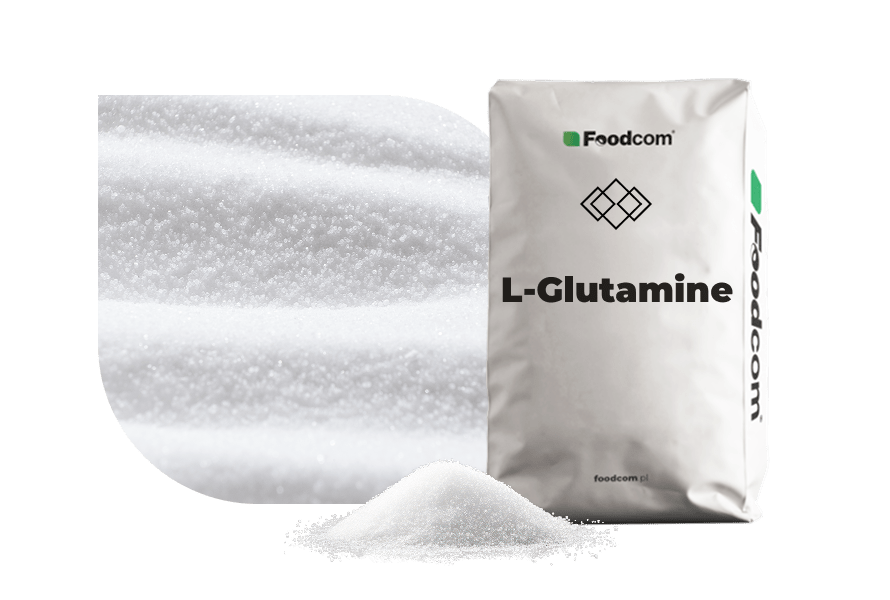
L-Glutamine Bulk Wholesale EU Free Form · Clinical Grade
The most abundant amino acid in human muscle — and the most complex story in sports and clinical nutrition. L-glutamine free form bulk from EU stock with the most comprehensive technical resource available: clinical applications guide, dosage calculator, solubility data and synergistic stack builder.
Glutamine is unique among amino acids in the breadth of its physiological roles. No other amino acid simultaneously fuels immune cells, maintains gut integrity, shuttles nitrogen between tissues, and serves as a key anabolic signal. Understanding these pillars explains why demand across sports, clinical and gut health markets is growing.
🦠
Conditionally Essential Status
Synthesised endogenously under normal conditions but demand exceeds synthesis capacity during exercise, illness, surgery or stress. Plasma glutamine falls 20–80% in these states — making supplementation essential, not optional.
Enterocytes derive 30–40% energy from glutamine. Fuels synthesis of tight junction proteins (claudin-1, occludin, ZO-1) that seal intercellular spaces. Deficiency → measurable increase in intestinal permeability within 48–72 hours.
Gln → enterocyte energy + tight junction proteins ZO-1 expression ↑ by PI3K/Akt pathway activation
🛡️
Immune Cell Fuel
Lymphocytes and macrophages consume glutamine at rates comparable to glucose during immune activation. Exercise depletes plasma glutamine → immunosuppression 'open window'. Supplementation maintains lymphocyte proliferation, NK cell cytotoxicity and secretory IgA.
Lymphocyte proliferation ↓ when plasma Gln <500 μmol/L Post-exercise: falls from ~600 to ~400 μmol/L
🔄
Nitrogen Shuttle & pH Buffer
Muscle glutamine synthetase fixes ammonia from amino acid catabolism into glutamine. Non-toxic nitrogen is transported to liver (urea cycle) and kidneys (ammoniagenesis for acid-base balance). This is the primary mechanism of post-exercise ammonia clearance.
C₅H₁₀N₂O₃ — the amide group that defines glutamine
L-Glutamine differs from glutamic acid (glutamate) by a single structural change: the side-chain carboxyl group (–COOH) is replaced by an amide group (–CONH₂). This amide is the nitrogen donor in biosynthetic reactions — transferring the amide-NH₂ to purine rings, glucosamine, NAD, CTP and asparagine. The reaction is reversible via glutaminase: glutamine + H₂O → glutamate + NH₃. The specific optical rotation [α]D20 = +6.1° to +6.9° confirms the L-isomer (biologically active) vs D-glutamine (biologically inert).
Certificate of Analysis — typical values
Full CoA per batch — on request free of charge
Assay (L-glutamine)≥99.0% (HPLC)
Specific optical rotation[α]D20 = +6.1° to +6.9°
Molecular formulaC₅H₁₀N₂O₃
Molecular weight146.14 g/mol
Loss on drying≤0.2%
Residue on ignition≤0.1%
pH (2% solution)5.0–6.5
Solubility (20°C)~36 g/L
Lead (Pb)≤5 ppm
Mercury (Hg)≤0.1 ppm
TPC≤1000 CFU/g
SalmonellaAbsent / 25g
Allergen statusNone (EU 1169/2011)
Vegan / non-GMOYes — confirmed
Why glutamine is the most abundant amino acid in muscle — and why it falls
Skeletal muscle is the primary glutamine biosynthesis and storage organ in the body. Resting muscle maintains glutamine concentrations of 15–25 mM intracellularly — the highest concentration of any amino acid. This vast pool serves as a buffer: when peripheral demands increase (intestine, immune cells, kidneys), muscle releases glutamine into the circulation at a rate that can reach 10–12 μmol/100g/hour during intense exercise or critical illness.
The consequence is a significant and rapid fall in muscle glutamine — measurably 50% within 24 hours of major surgery, up to 40% after a marathon, and progressively in anyone with chronic high exercise loads, inadequate protein intake, or persistent stress. This is not a "luxury" reduction — it directly impairs the muscle's ability to synthesise protein, support satellite cell function, and maintain intracellular water volume.
Why free-form L-glutamine specifically? The supplement market contains glutamine in multiple forms: free-form, alanyl-glutamine dipeptide, glutamine peptides (from hydrolysed whey). For oral supplementation, free-form L-glutamine at ≥99% purity is the appropriate and most cost-effective choice. Alanyl-glutamine offers higher solubility for parenteral nutrition but is significantly more expensive and offers no advantage for oral use.
The gut-immunity-muscle connection
These three systems are deeply interconnected through glutamine. The intestinal lining — which must renew every 3–5 days — consumes 30–40% of total glutamine flux. If gut glutamine supply falls (from reduced dietary intake, excessive exercise, stress, or illness), intestinal barrier integrity declines. A compromised barrier allows bacterial endotoxins (lipopolysaccharide, LPS) to translocate into the portal circulation, triggering systemic inflammation. This inflammation then activates immune cells, which consume yet more glutamine, further reducing the pool available for muscle. The vicious cycle is well-documented in critical illness and is a key rationale for clinical glutamine supplementation in ICU patients.
Gut-immunity-muscle: the glutamine triangle
These three systems are deeply interconnected through glutamine. The intestinal lining — which renews every 3–5 days — consumes 30–40% of total glutamine flux. If gut glutamine supply falls, intestinal barrier integrity declines. A compromised barrier allows bacterial endotoxins (LPS) to enter the portal circulation, triggering systemic inflammation.
This inflammation activates immune cells, which consume yet more glutamine, further reducing the pool available for muscle synthesis and repair. The vicious cycle is well-documented in critical illness and is the key rationale for clinical glutamine supplementation in ICU patients.
For athletes: the same cycle operates at lower intensity during heavy training blocks. Post-exercise, plasma glutamine falls, intestinal permeability transiently increases, and immune function is suppressed for 3–72 hours — the 'open window'. Supplementation at 5–10g post-exercise interrupts this cycle before it becomes self-reinforcing.
Why free-form L-glutamine? For oral supplementation, free-form L-glutamine ≥99% is appropriate for all applications. Alanyl-glutamine dipeptide has higher solubility (useful in parenteral nutrition) but is significantly more expensive with no advantage for oral use. FDCM supplies food-grade free-form L-glutamine — the correct form for supplement formulation, enteral products and direct-to-consumer powders.
Evidence-based clinical guide
Clinical applications of L-glutamine — dosing protocols across four areas
L-glutamine has documented clinical applications across sports recovery, gut health, hospital nutrition and immune function. Each application has different dosing requirements, timing protocols and evidence bases. Select an area below for the complete protocol guide.
🏋️ Sports Recovery
🦠 Gut Health & Intestinal Barrier
🏥 Hospital / ICU Nutrition
🛡️ Immune Function
Clinical vs sports dosing: The single biggest misconception about glutamine is that the 5g/day dose used in sports recovery studies is adequate for gut health applications. It is not — gut health research consistently uses 15–30g/day to achieve measurable intestinal permeability changes. These are very different applications with completely different dose-response relationships.
Physical chemistry data
L-Glutamine solubility vs temperature — comparison with other amino acids
Solubility (g per litre of water) at five temperatures for L-glutamine and four reference amino acids. L-glutamine has moderate solubility — significantly lower than taurine and glycine but higher than creatine. Critical for formulation: at 20°C, glutamine saturates at ~36 g/L; hot-fill products can dissolve much higher concentrations.
Amino acid solubility (g/L water) vs temperature — L-glutamine highlighted
L-Glutamine (free form)
Creatine Monohydrate
Taurine
L-Leucine (BCAA)
L-Arginine
Data: literature equilibrium values. Glycine is shown as reference (very high solubility). L-glutamine and L-leucine represent typical BCAA-class solubility. Hot beverages (60–80°C) allow significantly higher glutamine concentration before saturation.
Formulation note: At the typical 5g dose per serving in sports products, solubility is not limiting — 5g dissolves easily in 200ml at room temperature (concentration ~25 g/L, below the 36 g/L limit). At therapeutic doses (15–20g per serve), ensure at least 300–400ml liquid to stay below saturation. Glutamine is stable in acidic conditions (pH 3–7) but degrades in alkaline conditions above pH 9 and at temperatures above 60°C for extended periods — do not add to hot beverages or alkaline formulations.
Formulation tool
L-Glutamine dosage calculator — personalised protocol by application
Enter body weight, target application and delivery format. The calculator generates a daily dose recommendation, per-serving breakdown, monthly consumption estimate and bulk cost projection.
Metabolic physiology
L-Glutamine as nitrogen shuttle — inter-organ nitrogen transport
The nitrogen transport problem — and how glutamine solves it
Every time an amino acid is used for energy (gluconeogenesis, oxidation), it releases its nitrogen as ammonia (NH₃). Ammonia is highly toxic — concentrations above 200 μmol/L cause neurological symptoms; above 500 μmol/L are potentially fatal. The body must rapidly neutralise and transport this nitrogen to excretion sites (kidneys, liver).
Glutamine is the primary solution. In muscle: the enzyme glutamine synthetase adds NH₃ to glutamate → glutamine. This reaction uses ATP but produces a non-toxic, water-soluble nitrogen carrier. Glutamine releases from muscle at rates of 2–10 μmol/100g/minute during exercise — the highest release rate of any amino acid by far.
In the liver and kidneys: glutaminase removes the amide nitrogen from glutamine → ammonia → urea (liver) or urinary ammonium (kidneys). The carbon skeleton becomes α-ketoglutarate → enters Krebs cycle. The kidneys use glutamine nitrogen selectively to buffer acid — increased during metabolic acidosis (intense exercise, high-protein diet, ketosis).
Why this matters for supplementation: Supplemental glutamine spares endogenous muscle glutamine from being used for nitrogen transport — preserving it for anabolic signalling, cell volume maintenance and protein synthesis. This is the mechanistic basis for glutamine's documented ability to reduce muscle protein catabolism during exercise and critical illness.
Glutamine and the intestine–liver axis
A significant portion of portal blood glutamine (estimated 30–40%) is taken up by the liver before entering systemic circulation. Hepatic glutaminase converts glutamine to glutamate and ammonia — the ammonia entering the urea cycle. During fasting, the intestine is a net glutamine consumer; after meals, as intestinal glutamine demand decreases, more reaches systemic circulation. This explains why split dosing (with meals, or at times of low intestinal demand — overnight fasting) can maximise systemic availability of supplemental glutamine.
Inter-organ glutamine flux — visual model
Synergistic formulations
L-Glutamine stack builder — three complete protocols
L-glutamine works synergistically with different co-ingredients depending on the target application. Select a protocol to see the complete ingredient list with doses, timing and functional roles. All ingredients available from FDCM EU stock.
🏋️ Sports Performance Stack
🦠 Gut Health Protocol
🛡️ Immune & Recovery Stack
Regulatory & safety profile
L-Glutamine safety — EU regulatory status & clinical safety data
L-glutamine has one of the best-documented safety profiles among all food supplement ingredients. EFSA has reviewed it, it has decades of clinical use at high doses, and it has no E-number (it's a food ingredient, not an additive).
Parameter
Status / Value
Notes
Regulatory status
✓ Safe Food ingredient (not a food additive). No E-number. No maximum limit in food.
—
EFSA safety opinion
✓ Safe No adverse effects at doses up to 14g/day for adults (EFSA NDA 2010/2011). Higher doses studied in clinical contexts.
—
Novel Food status
✓ Safe Not a novel food — long history of use in food supplements before 1997 EU Novel Food Regulation
—
GRAS status (USA)
✓ Safe Generally Recognized as Safe (GRAS) — affirmed by FDA
—
Contraindications
⚠ Caution Renal impairment, liver cirrhosis, hepatic encephalopathy (glutamine → ammonia). Phenylketonuria not relevant (glutamine is not phenylalanine).
—
Upper safe level
✓ Safe No established UL; 20–40g/day used therapeutically in clinical settings for decades
—
Drug interactions
✓ Safe No known significant interactions. May enhance effects of nitrogen-containing medications theoretically.
—
Allergens
✓ Safe Not a listed allergen (EU 1169/2011). Produced by fermentation or chemical synthesis — vegan-suitable.
—
When NOT to use L-glutamine: Hepatic encephalopathy (advanced liver disease) — glutamine is converted to ammonia in the liver; impaired liver cannot process this, worsening encephalopathy. Severe renal impairment — same mechanism, kidneys process glutamine nitrogen. These are the only clinically relevant contraindications for oral supplementation at standard doses. For ICU parenteral supplementation at very high doses, the evidence is more nuanced — see REDOXS trial data.
Full catalogue
L-Glutamine & synergistic ingredients — FDCM EU stock
L-glutamine plus the ingredients most commonly combined in sports recovery, gut health and immune support formulations. All from EU stock with CoA per batch.
Road freight from Warsaw EU warehouse. Full tracking, 3–7 business days. 25 kg minimum, no framework contract. Consolidated multi-ingredient orders ship as one consignment.
L-Glutamine bulk EU — the most complete technical FAQ available
Each answer written at biochemist / food scientist level — with molecular mechanisms, clinical data references and practical formulation guidance.
L-glutamine is the most abundant free amino acid in the human body — making up 60% of the amino acid pool in skeletal muscle and comprising approximately 20% of total amino acid nitrogen in blood. It is classified as conditionally essential: under normal conditions, the body synthesises sufficient glutamine from glutamic acid and ammonia via the enzyme glutamine synthetase. However, during physiological stress — intense exercise, critical illness, major surgery, burns, cancer — the demand exceeds the body's synthetic capacity by 50–150%. In these states, glutamine becomes essential and must be obtained from dietary or supplemental sources. Without supplementation in these conditions, plasma glutamine falls by 50–80%, with direct consequences for gut integrity, immune function and nitrogen balance.
Enterocytes — the epithelial cells lining the small intestine — have an extraordinarily high energy demand and derive 30–40% of their fuel from glutamine, more than from glucose. Glutamine is required for three distinct mechanisms of intestinal barrier maintenance: (1) Tight junction protein synthesis: claudin-1, occludin, and ZO-1 form the intercellular seals between enterocytes — glutamine is required for their synthesis and maintenance via activation of PI3K/Akt signalling pathway. Without adequate glutamine, tight junction protein expression falls and intestinal permeability increases measurably within 48–72 hours. (2) Enterocyte proliferation: the intestinal lining renews every 3–5 days — glutamine fuels this rapid cell division via purine nucleotide synthesis and glutathione production. (3) Mucus layer integrity: goblet cells require glutamine to produce mucins — the protective glycoprotein layer above the epithelium. Clinical supplementation at 15–20g/day has been shown in multiple RCTs to reduce intestinal permeability markers (lactulose:mannitol ratio, serum endotoxin) within 2–4 weeks.
Intense exercise produces a well-documented 'open window' of immunosuppression lasting 3–72 hours — during which infection risk is significantly elevated. The mechanism is partly glutamine-dependent: lymphocytes (both T and B cells) and macrophages consume glutamine at near-maximal rates during immune activation, comparable to their glucose consumption. Plasma glutamine falls by 20–40% during and after intense exercise as muscle releases glutamine to fuel other tissues. Low plasma glutamine correlates with: reduced lymphocyte proliferation, impaired natural killer cell cytotoxicity, reduced IgA secretion, and increased upper respiratory tract infection rates in athletes. Supplementation at 5–10g post-exercise maintains plasma glutamine above the threshold associated with immunosuppression. The ISSN consensus statement (2021) concludes that glutamine supplementation can reduce post-exercise infection rates in endurance athletes.
Free-form L-glutamine (what FDCM supplies) is the isolated amino acid — pure L-glutamine monohydrate, purity ≥99%. Glutamine peptides are short peptide chains (dipeptides, tripeptides) containing glutamine, found in hydrolysed whey protein and alanyl-glutamine dipeptide supplements. The differences: (1) Solubility: alanyl-glutamine is ~1000× more soluble than free glutamine — useful in clinical IV solutions where solubility at physiological concentrations is limiting. (2) Stability: free glutamine is less stable in solution at high temperatures and low pH; peptide forms are more stable. (3) Bioavailability: both are absorbed effectively — peptides via dipeptide transporters (PepT1), free glutamine via amino acid transporters (ASCT2). (4) Cost: free-form glutamine is significantly cheaper. For oral supplementation, free-form L-glutamine at ≥99% purity is appropriate for all applications; alanyl-glutamine is used in parenteral nutrition where solubility is critical.
ESPEN (European Society for Clinical Nutrition and Metabolism) guidelines recommend parenteral glutamine supplementation in ICU patients: 0.2–0.4 g/kg/day (equivalent to 0.3–0.5g/kg alanyl-glutamine). This is based on multiple RCTs showing reduction in infections, shorter ICU stay, and lower mortality in specific ICU populations. Key clinical evidence: (1) Burns: glutamine supplementation significantly reduces septic complications and hospital stay. (2) Post-surgical: parenteral glutamine reduces infections and nitrogen losses. (3) Bone marrow transplant: reduces mucositis severity and shortens hospital stay. Important: For ICU use, pharmaceutical-grade parenteral glutamine (alanyl-glutamine dipeptide for IV) differs from food-grade L-glutamine powder (for enteral/oral use). Food-grade L-glutamine from FDCM is suitable for enteral nutrition supplements, not for intravenous administration.
L-glutamine has an excellent safety profile at recommended doses. Key data: (1) EFSA assessment: no adverse effects observed at doses up to 14g/day in healthy adults. (2) Clinical use: doses of 20–40g/day have been used in clinical nutrition research for decades without serious adverse events in healthy individuals. (3) Upper limit: no established UL; high doses (>40g/day) not well-studied but not associated with toxicity in clinical use. Contraindications: Glutamine should be used with caution or avoided in: hepatic encephalopathy (glutamine is converted to ammonia and glutamate in the liver — elevated ammonia is dangerous), severe renal impairment (same mechanism), some forms of inborn errors of metabolism. In critically ill patients with multi-organ failure, large-scale RCTs (REDOXS, SIGNET) showed no benefit and possible harm at very high doses (0.5g/kg/day IV) in the most severely ill patients — but this applies to parenteral, very high-dose use in specific ICU populations, not oral supplementation at standard doses.
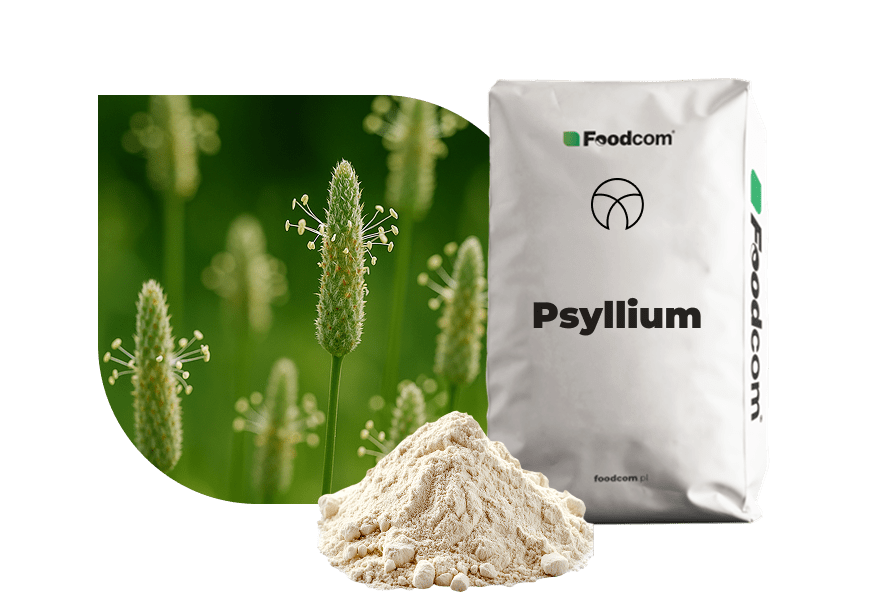
L-glutamine does not directly feed beneficial gut bacteria (it is absorbed in the small intestine before reaching the colon in significant amounts). Its gut microbiome benefit is indirect: by maintaining intestinal barrier integrity, glutamine creates a healthier intestinal environment for the microbiome. The gut-glutamine-microbiome interaction: (1) Glutamine strengthens tight junctions → reduces translocation of lipopolysaccharide (LPS) from gram-negative bacteria → less systemic inflammation → reduced inflammatory suppression of beneficial bacteria. (2) Glutamine promotes mucus production → thicker mucus layer → better habitat for beneficial mucus-associated bacteria like Akkermansia muciniphila. (3) Glutamine is synergistic with prebiotic fibres (inulin, psyllium): glutamine maintains the barrier while prebiotic fermentation produces SCFA that further strengthen tight junctions. This is the rationale for the 'Gut Health Protocol' stack combining glutamine, inulin and psyllium.
This is glutamine's most fundamental metabolic role. The body faces a problem: tissues that catabolise amino acids (muscle, primarily) produce free ammonia (NH₃), which is toxic. Glutamine solves this: glutamine synthetase in muscle adds NH₃ to glutamate → glutamine. This non-toxic nitrogen carrier travels in blood to the liver (where it is deaminated → urea cycle) and kidneys (where NH₃ is excreted into urine for acid-base balance). During intense exercise, muscle glutamine synthesis increases 3–5× as the muscle processes the ammonia produced by amino acid catabolism for energy. This is why muscle glutamine pools fall so dramatically during exercise — it's not just that glutamine is 'used up,' it's that the muscle is working overtime as a nitrogen detoxification organ. Supplemental glutamine supports this system, reducing ammonia accumulation in muscle and blood (documented post-exercise ammonia reduction in supplementation studies).
Timing depends on the primary application: (1) Sports recovery: 5g immediately post-workout (when muscle uptake mechanisms are active and plasma glutamine is lowest), optionally 5g additional at bedtime (peak growth hormone secretion — anabolic window for mucosal repair). (2) Gut health / intestinal barrier: spread throughout the day in 3 equal doses with meals — this maintains continuous glutamine delivery to enterocytes, which have a 3–5 day turnover cycle and require constant supply. Morning fasting dose is particularly important: overnight fast depletes glutamine available to enterocytes. (3) Immune support: morning (before the immune system's peak activity) + post-exercise. (4) Clinical/ICU: continuous enteral delivery maintains constant plasma levels — appropriate for critical illness. Stability note: L-glutamine is relatively stable in acidic conditions and survives gastric transit. It can be taken with or without food. Heat stability is lower than creatine — do not add to hot beverages.
L-glutamine and MSG (monosodium glutamate = sodium salt of glutamic acid) are chemically related but metabolically distinct. The key fear — that supplemental glutamine raises brain glutamate levels and causes neurological effects — is not supported by evidence at standard doses. Here's why: (1) The blood-brain barrier tightly regulates glutamine and glutamate transport into the brain. (2) Glutamine does not cross the BBB via the same transporters as glutamate. (3) Brain glutamine-glutamate cycling is regulated by astrocytes independently of peripheral plasma levels. (4) Standard oral supplementation doses (5–15g) do not significantly raise plasma glutamate. (5) MSG neurological concerns are also not supported by scientific evidence (the 'MSG sensitivity' phenomenon has not been validated in double-blind challenge studies). However: in hepatic encephalopathy, where the liver cannot convert ammonia to urea, supplemental glutamine can worsen encephalopathy by increasing ammonia production — this is the one contraindicated clinical situation.
FDCM supplies L-glutamine free form at ≥99% purity (HPLC). Standard CoA per batch includes: assay (≥99% L-glutamine by HPLC), specific optical rotation ([α]D20 +6.1° to +6.9° — confirms L-isomer), heavy metals (Pb ≤5ppm, Cd ≤1ppm, As ≤1ppm, Hg ≤0.1ppm per EU 231/2012), loss on drying (≤0.2%), residue on ignition (≤0.1%), pH (5.0–6.5 in 2% solution), microbiological (TPC ≤1000 CFU/g, coliforms ≤10 CFU/g, Salmonella absent/25g, S. aureus absent/g). The optical rotation parameter is critical — it confirms the L-enantiomer (biologically active form) vs D-glutamine (biologically inactive, not used by enzymes). On request: allergen declaration (not a listed allergen EU 1169/2011), vegan declaration, halal/kosher certificates.
25 kg minimum (one bag). No framework contract, no minimum annual volume. Order processing: 1–2 business days. DSV road freight 3–7 business days to all 27 EU member states, full shipment tracking from dispatch. Consolidated multi-ingredient orders (e.g. glutamine + inulin + psyllium for gut health stack) ship as one consignment — one invoice, one shipment. Contact contact@fdcm.eu for volume pricing above 100 kg/month and consolidated stack quotes.
Order & Enquiries
Source L-glutamine bulk from EU stock
We respond to all B2B enquiries within 4 business hours
DSV road freight · 3–7 business days All 27 EU member states Full tracking from dispatch Delivery options →
Ready to source L-glutamine bulk from EU stock?
25 kg minimum · ≥99% purity · CoA per batch · Free form · Vegan · DSV delivery to all 27 EU member states in 3–7 business days. Consolidated stack orders welcome.